
00:00
/
00:00
Differences between thermostatic and manual radiator valves and their significance for smart thermostats
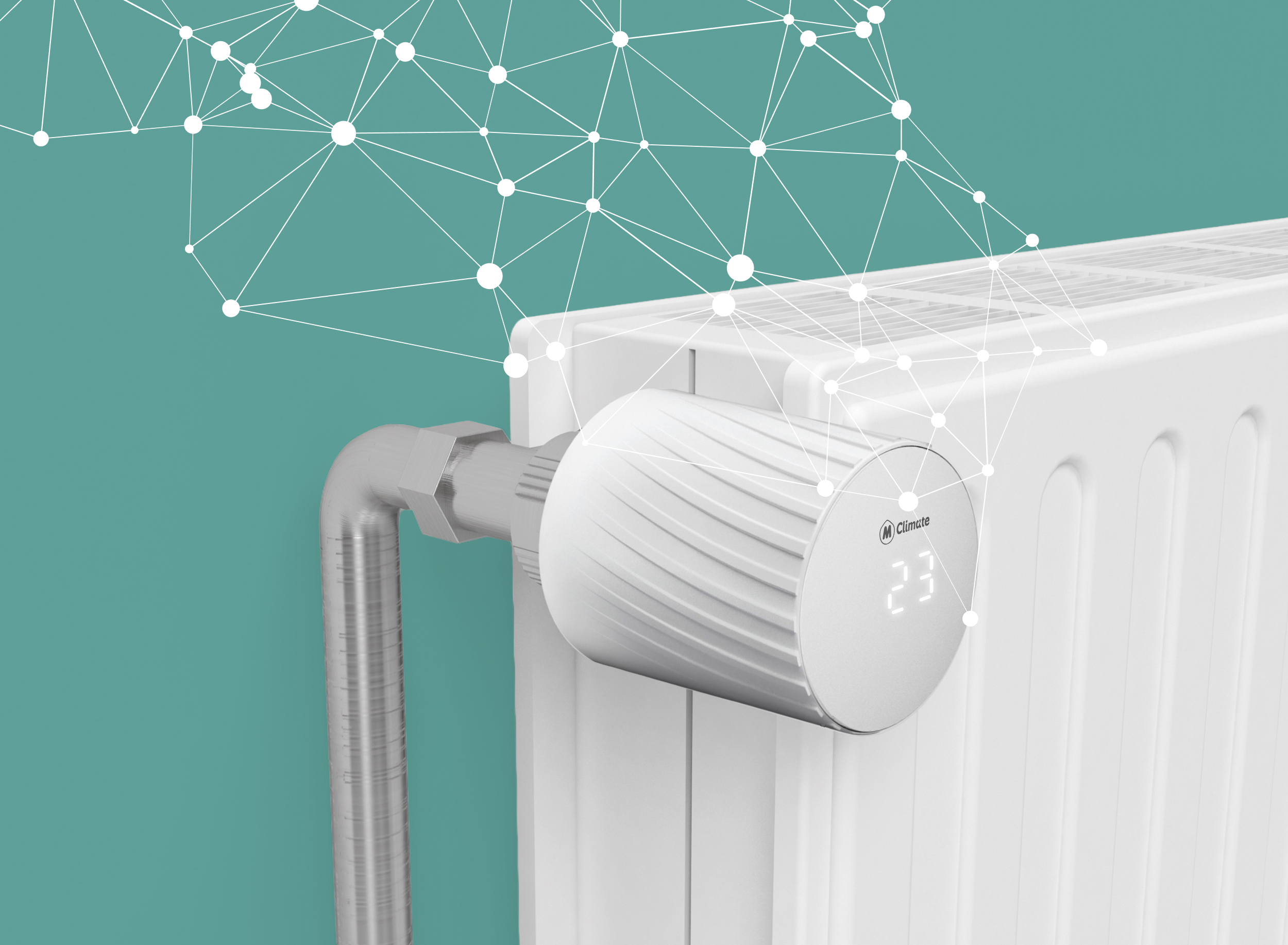
When retrofitting smart thermostats in existing buildings, the valve type plays a central role. In buildings, he decides whether predictive individual room control is technically possible at all. The focus is on two valve groups that are most common in radiator systems: thermostatic radiator valves and manual radiator valves.
Thermostatic radiator valves
Thermostatic radiator valves (THV) are the standard in many buildings and often form the preferred basis for IoT-based individual room control. You work with a movable valve pin, whose position determines the flow rate of heating water. Classic thermostat heads contain a temperature-dependent sensor with wax or liquid, which expands as the room temperature rises and contracts when the temperature drops. This change in volume adjusts the valve pin: When cooled, the valve opens wider and allows more hot water to flow into the radiator; when heated, it reduces the flow rate.
The existing mechanical thermostat head can easily be replaced by a smart drive that uses the same valve mechanism. Modern thermostats can control the valve pin with high precisionto increase the efficiency of temperature control. So they are compatible with solutions such as from Viboo.
Technical characteristics
- integrated temperature sensor (wax or liquid element)
- automatic adjustment of valve lift to room temperature
- reproducible, sensitive movement
- compatible with M30 x 1.5 or comparable industrial connections
Manual radiator valves
Manual valves are common in older existing buildings. The valves follow a pure Off/off mode, which means that they have neither a thermostatic control mechanism nor a movable valve pin. Since there is no defined control variable, digital thermostat attachments can not used become.
Technical characteristics
- Flow can only be changed manually
- no temperature sensor
- No control mechanism that could be controlled digitally
- Numbers, displays, or other control buttons
In many cases, the valve insert can be replaced by a thermostatic model (e.g. M30 x 1.5) be replaced. This procedure is uncomplicated and creates the conditions for digital radiator control, but should be carried out by a specialist.
Conclusion: Thermostatic vs. manual radiator valves
Only thermostatic radiator valves enable the precise digital control required for smart thermostats and modern control strategies.
Manual valves must be converted in advance in order to operate a digital system reliably.
How viboo makes buildings more efficient
viboo makes existing radiator systems digitally controllable — through IoT-enabled thermostats that use artificial intelligence to predictive individual room control enable. The control system continuously learns the thermal behavior of each room, takes into account weather forecasts, building dynamics and usage patterns, and automatically optimizes heating operations as required.
The smart thermostats are easy to retrofit and are connected via a gateway with the viboo.cloud connected. The platform collects, visualizes and evaluates operating and sensor data in real time. This not only reduces energy consumption, but also makes buildings data-enabled — an important step for digital business management.
The result: 20-40% less heating energy, permanently stable and comfortable room temperatures as well as a precise, data-driven understanding of building behavior.
Would you like to make your real estate portfolio more energy efficient, transparent and sustainable? Feel free to contact us here and we show how viboo digitizes buildings, reduces operating costs and enables data-based optimization across the entire inventory.
Weitere Artikel

Tagesanzeiger: Digitalization and automation as the key to sustainable renovation
As part of the Tagesanzeiger section “FOKUS Immobilien”, which was published on 29.11.2025, viboo publishes a report on digitization and automation as the key to sustainable restructuring — and uses the VIBOO approach to show how owners can already take a quick, cost-effective and sustainable step towards ESG and decarbonization goals with predictive control.

viboo Closes €3.3 Million Financing Round with Leading PropTech Investor
Realyze Ventures, Zürcher Kantonalbank, existing investors HTGF and Swisscom, and additional new investors back Swiss Climate and PropTech startup viboo with €3.3 million.

Erfolgreiche Zusammenarbeit mit Marktführer Danfoss
Das Empa-Spin-off viboo hat dafür einen selbstlernenden Algorithmus entwickelt, der es ermöglicht, auch ältere Gebäude mit rund 25 Prozent weniger Heizenergie zu betreiben – bei unverändertem oder sogar verbessertem Nutzerkomfort.
BLICK: Schweizer Jungunternehmer im Kampf gegen steigende Heizkosten
Viboo wurden vom Blick vorgestellt, der mit 472'000 Lesern pro Tag meistgelesenen bezahlten Zeitung der Schweiz.

Smart Energy vs. Traditionelle Energie: Ein Wendepunkt für Gewerbegebäude
Smart Energy transformiert Gewerbegebäude: IoT, Automatisierung und Datenanalyse senken Energiekosten um bis zu 40 % und reduzieren CO₂-Emissionen.
Ready to take the next step for the climate?
Find out how viboo can make your buildings more energy efficient — contact us today!